What if Healing Could Feel Like Play?
Why ART uses metaphors to make healing lighter, more playful, and easier for the brain to shift.
Accelerated Resolution Therapy (ART): A Rapid and Transformative Approach to Mental Health
Conditions Successfully Treated with ART Include:
- Anxiety
- Depression Phobias
- Panic Attacks
- Obsessive-Compulsive
- Disorder (OCD)
- Post-Traumatic Stress (PTS)
- Addictions / Substance Abuse
- Performance Anxiety
- Family Conflicts
- Low Self-Esteem / Victimization
- Sexual Trauma
- Relationship Issues / Infidelity
- Codependency
- Grief and Loss
- Work-Related Stress
- Pain Management
- Memory Enhancement
- Dyslexia-Related Anxiety
METAPHOR'S SPEAK YOUR BRAINS LANGUAGE
Your brain processes metaphorical phrases the same way it processes real experiences-activating sensory, motor, and emotional regions. By speaking in images (like “carrying a heavy load”), metaphors tap into circuits that literal words alone can’t reach.
BYPASS THE INNER CRITIC
Metaphors let you work around overthinking. Instead of getting stuck debating “why” you feel stuck, you engage your limbic system directly, where trauma lives—so real
transformation can begin.
FORGE NEW NEURAL CONNECTIONS
An ART therapist pairs client-chosen metaphors with guided eye movements during the memory reconsolidation window. This combination helps overwrite old, fear-based imagery with fresh, empowering scenes-and cements those new connections for long-lasting relief.
PLAYFUL, EMPOWERING, & MEMORABLE
When you invent your own metaphors
-like “deflating” a nightmare or
“rescuing” your inner child, the process becomes engaging and even fun. That sense of ownership boosts hope, motivation, and the likelihood you’ll carry these new patterns forward.
Accelerated Resolution Therapy (ART) offers a distinctive and highly effective method of psychotherapy.
What sets ART apart is its ability to help clients replace distressing mental images—those that fuel symptoms of Post-Traumatic Stress—with positive, self-selected images. Remarkably, this transformation often occurs in just one session. Once the negative imagery is replaced, triggers such as nightmares and intrusive thoughts typically disappear.
A growing body of research supports the effectiveness of ART. You can explore some of these findings here: ART Research and Evidence. ART has also been recognized as evidence-based by the Society of Clinical Psychology, Division 12 of the American Psychological Association (APA).
What further distinguishes ART is its integration of rapid eye movements—a technique that facilitates voluntary shifts in mental imagery—with established therapeutic modalities like Gestalt Therapy, Psychodynamic Therapy, and Guided Imagery. Within the ART framework, these eye movements and other protocol enhancements significantly accelerate the therapeutic process and enhance its impact.
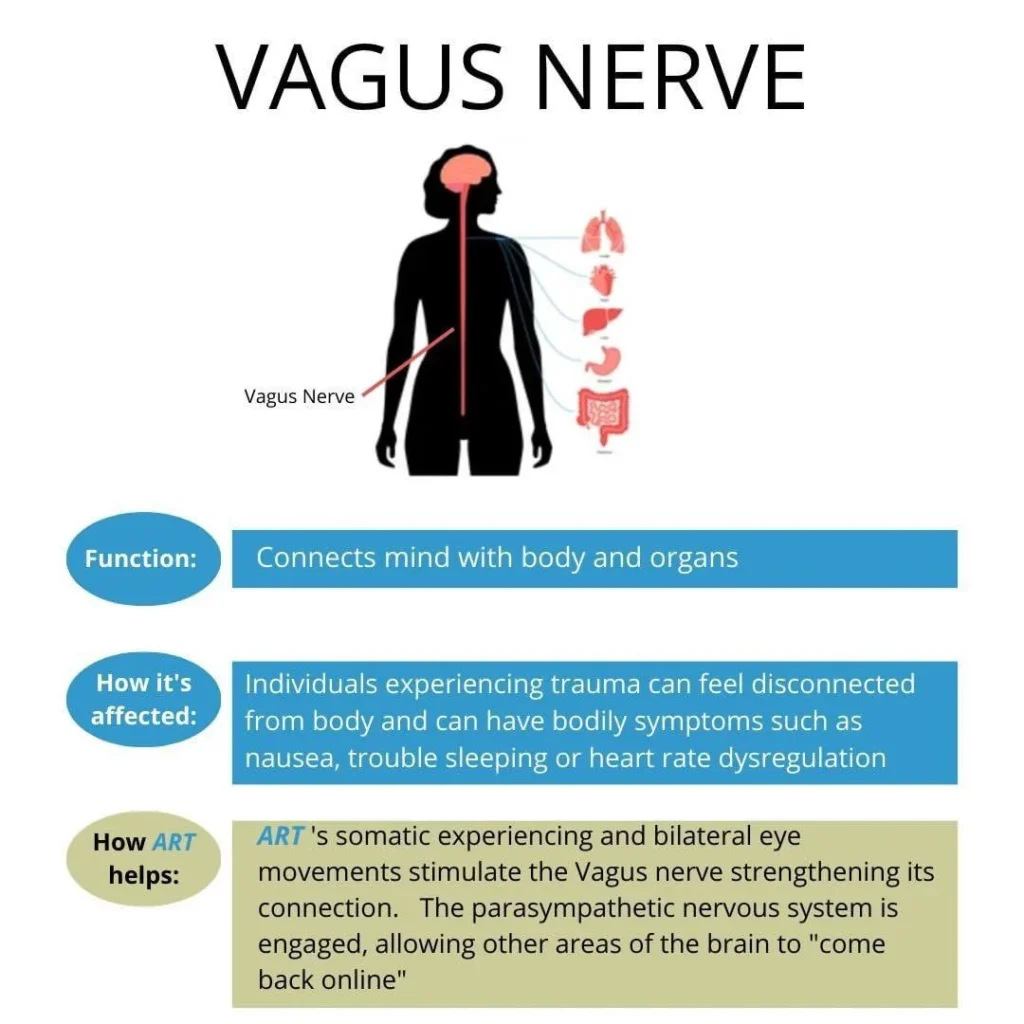
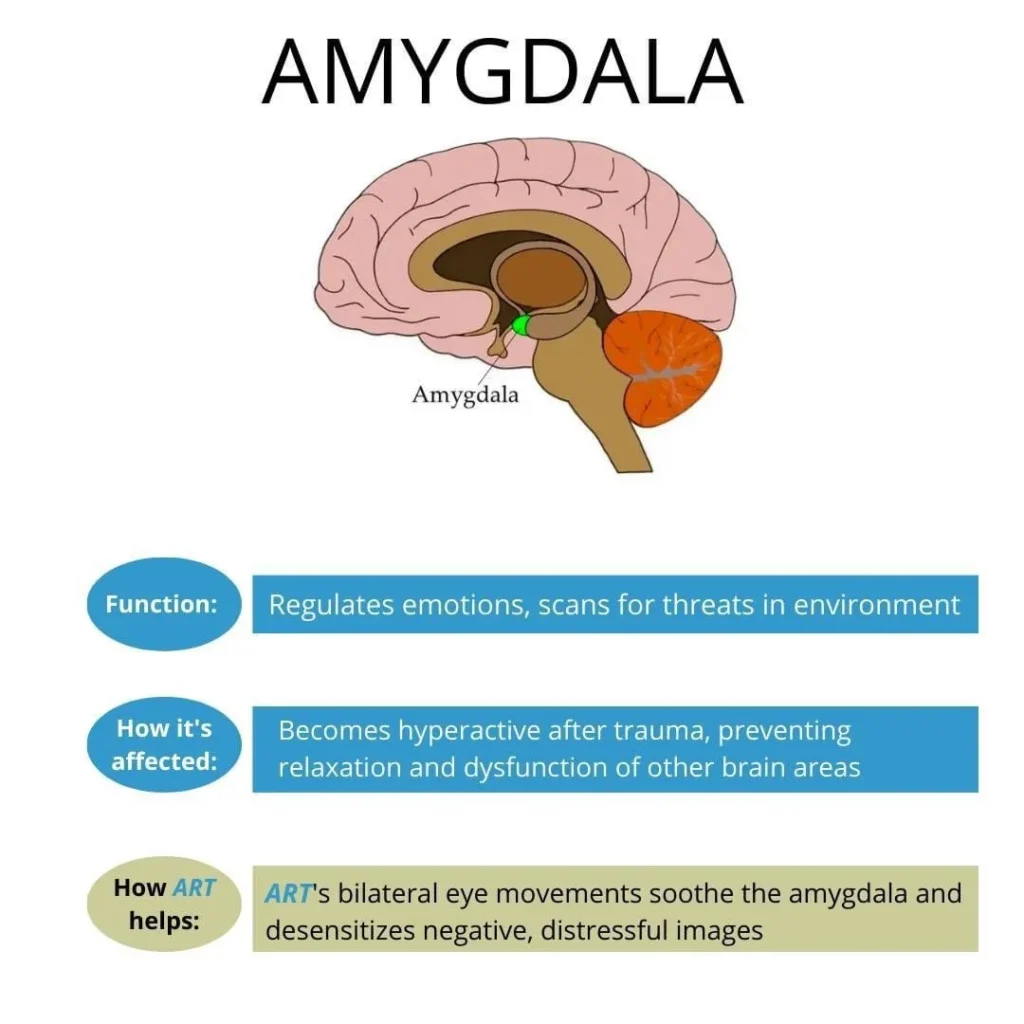
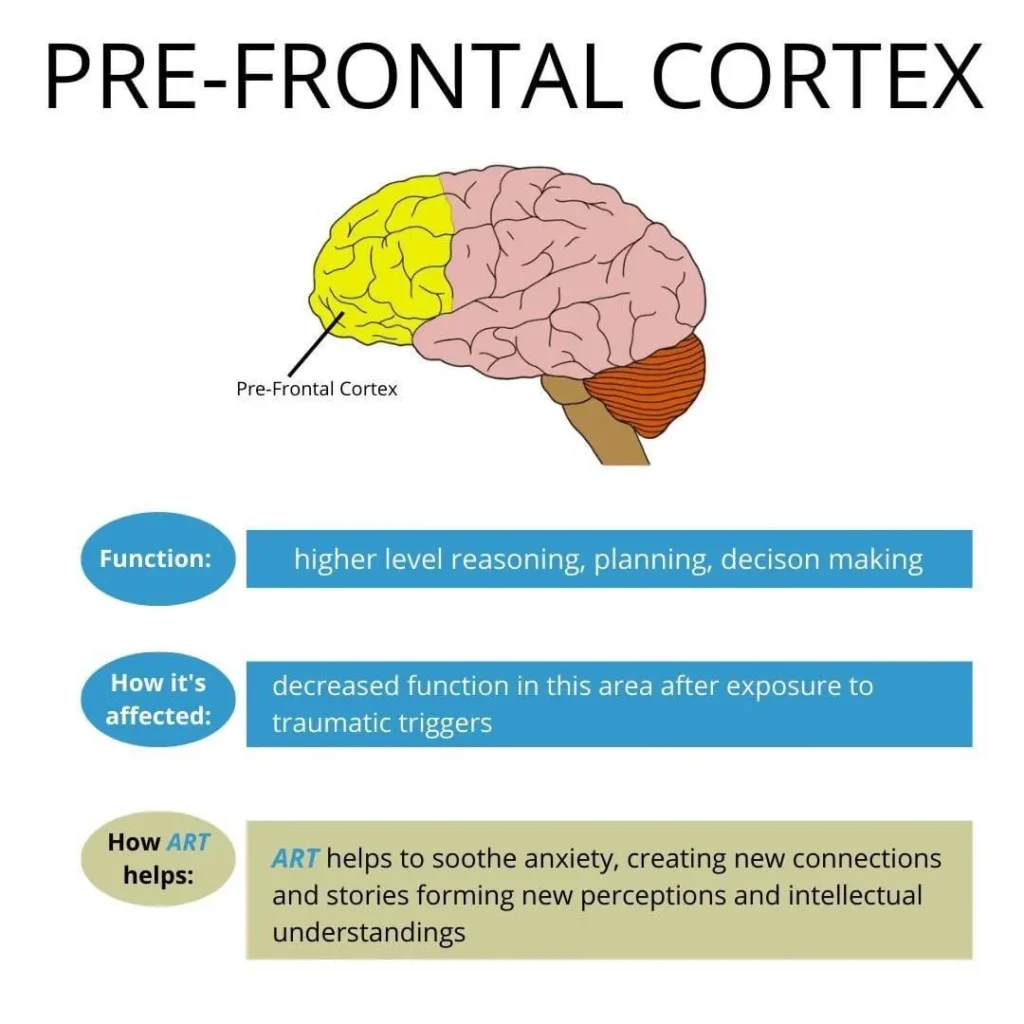
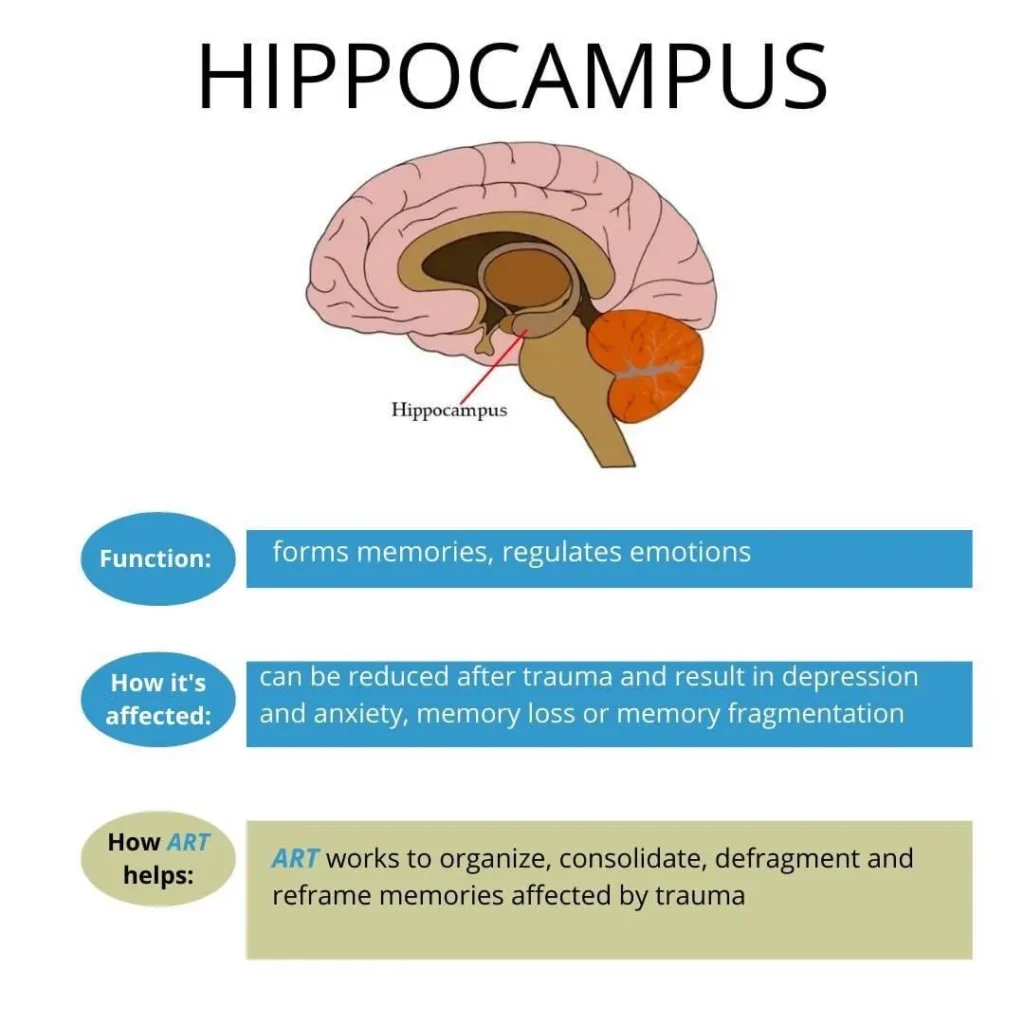
Scientific studies have shown that eye movements used in ART are not only calming but also therapeutic. These movements stimulate theta brain waves, which are associated with creativity, intuition, daydreaming, and meditative states.
A unique advantage of ART is that clients are not required to verbally disclose traumatic details. Because ART is a structured yet creative process, the client retains full control while the therapist serves as a supportive guide. This makes the experience less emotionally taxing for both the client and the therapist.
Although visualizing traumatic events such as sexual assualt, combat, or significant loss can be painful, ART rapidly moves clients beyond these stuck points. Early in the session, they begin to reshape their mental landscape with empowering, self-chosen imagery. Sessions are often described as calming—and even joyful—by both clients and therapists.
How ART Helps